Acharya Ravishena's Padmacharita
Padma Puranaपद्मपुराण · the Jain Ramayana
The Ramayana as the Jain tradition tells it. Follow Rama, Sita, Lakshmana, Ravana and Hanuman through seven great clans and 123 chapters, from the dawn of the dynasties to Rama's liberation.
- chapters
- 123
- clans
- 7
- people traced
- 227
A Ramayana with its own voice
Ravishena wrote to answer King Shrenika's doubt: could the great Ravana really have been a flesh-eating demon? The Jain telling keeps the beloved story and reads it through karma, vows and the soul's long journey.
Ravana is a Vidyadhara king
Rakshasa is the name of a royal house of Lanka, taken from an ancestor called Rakshasa. Ravana is a learned, devout king who keeps a vow never to take a woman who does not want him.
The Vanaras are human
Sugriva, Bali, Hanuman's allies and their kin are Vidyadharas who fly and command vidyas. The monkey is simply the emblem on their banners and crowns, adopted by King Amaraprabha.
Lakshmana ends the war
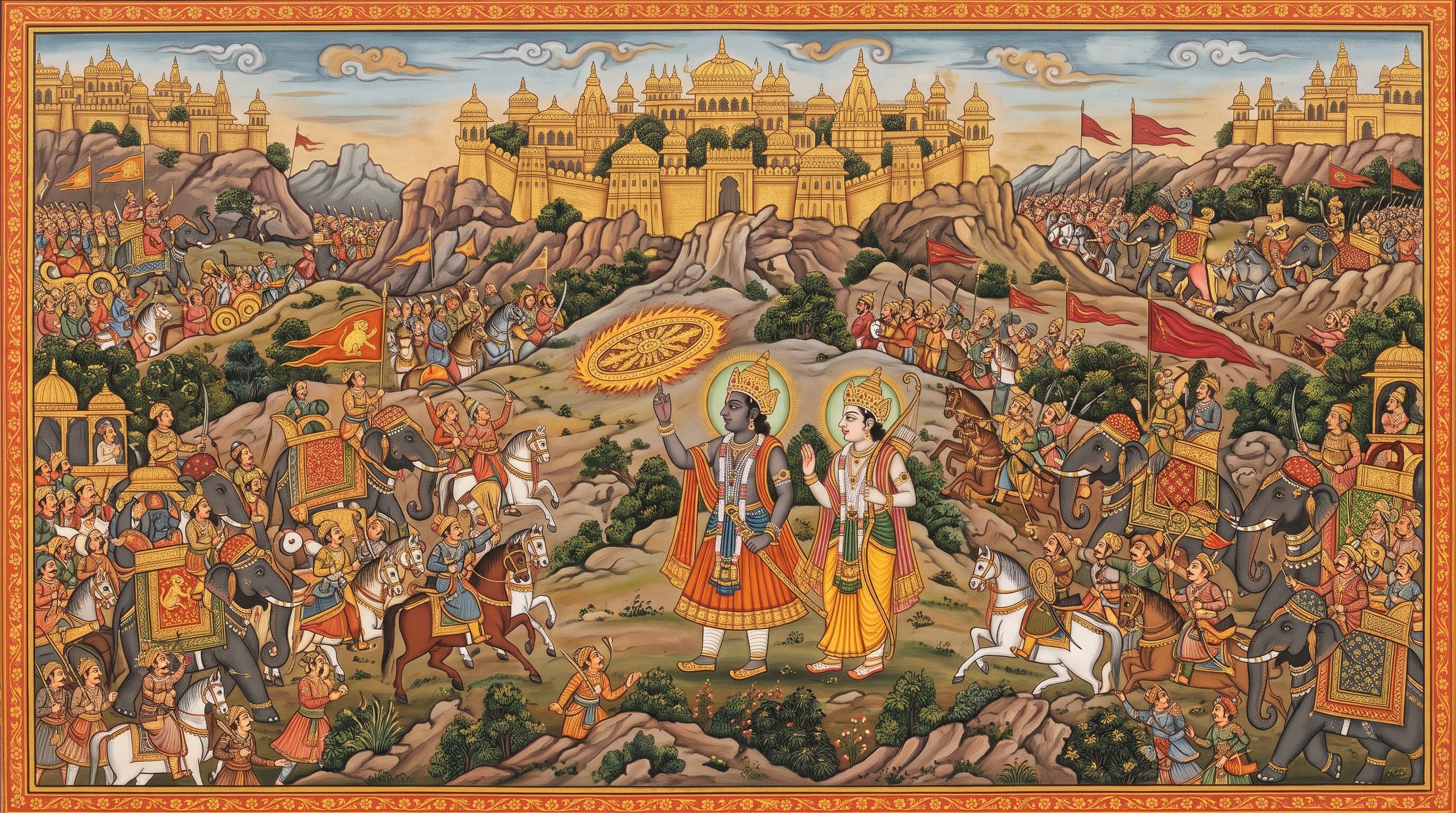
Rama is the eighth Baladeva, Lakshmana the eighth Narayana, Ravana the eighth Prati-narayana. Ravana's own chakra circles Lakshmana, settles in his hand, and is turned back on Ravana.
The story ends in liberation
Sita becomes an aryika, Hanuman and Lava and Ankusha renounce the world, and Rama, after grieving for Lakshmana, takes diksha, attains Kevala Jnana and reaches moksha.
Seven houses, one great family tree
The Padma Purana opens by tracing four great dynasties back to the age of Rishabhadeva, and shows how the Rakshasa and Vanara houses grew out of the Vidyadharas. Every house below has its own family tree, generation by generation.
Ikshvaku Vamsha
इक्ष्वाकु वंश
56 people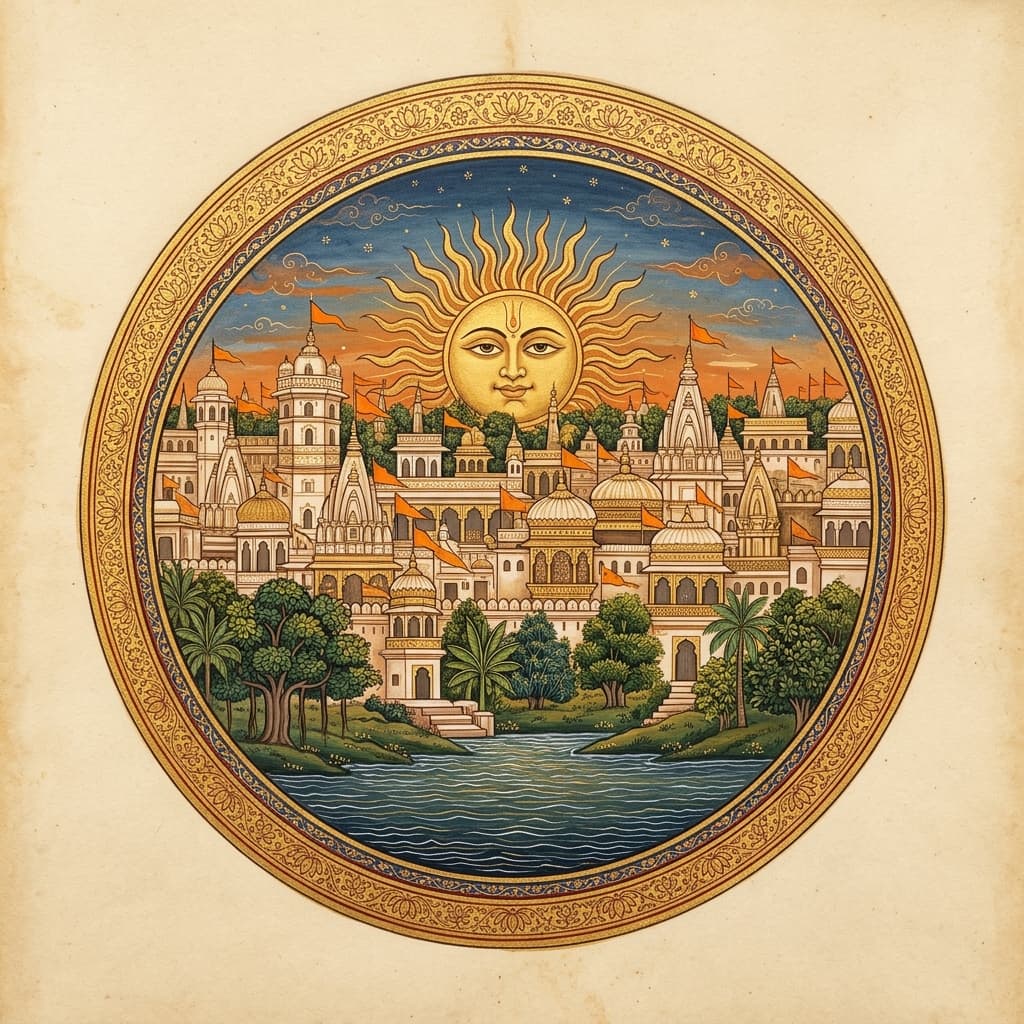
The first of the four great dynasties, born with Rishabhadeva, son of Nabhiraja, the last patriarch. Bharata's son Arkakirti (arka means the sun) gave it the solar branch, the Surya Vamsha. Ajitanatha and Sagara Chakravarti belong to it, and Rama descends from it through Raghu, Anaranya and Dasharatha.
- Seat
- Ayodhya
- Emblem
- The sun, through Arkakirti
- Era
- From Rishabhadeva to Rama
Soma Vamsha
सोम वंश
1 people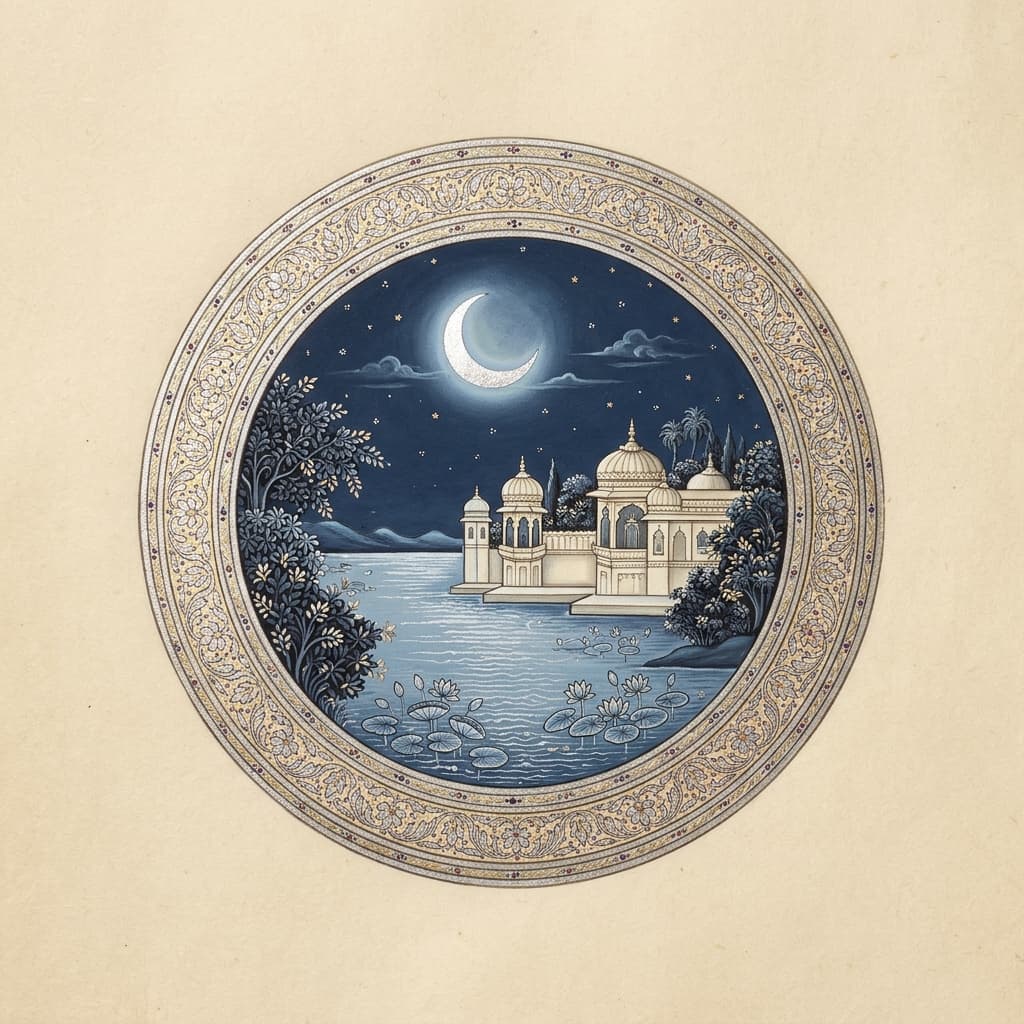
The lunar line, clear as the moon's rays. It began with Somayasha, son of Bahubali, Rishabhadeva's son by his second queen. Its kings, Saumya, Mahabala, Subala, Bhujabali and many more, gave their kingdoms to their sons and took the vows of munis.
- Seat
- Podanapura
- Emblem
- The moon
- Era
- From Bahubali's son onward
Vidyadhara Vamsha
विद्याधर वंश
58 people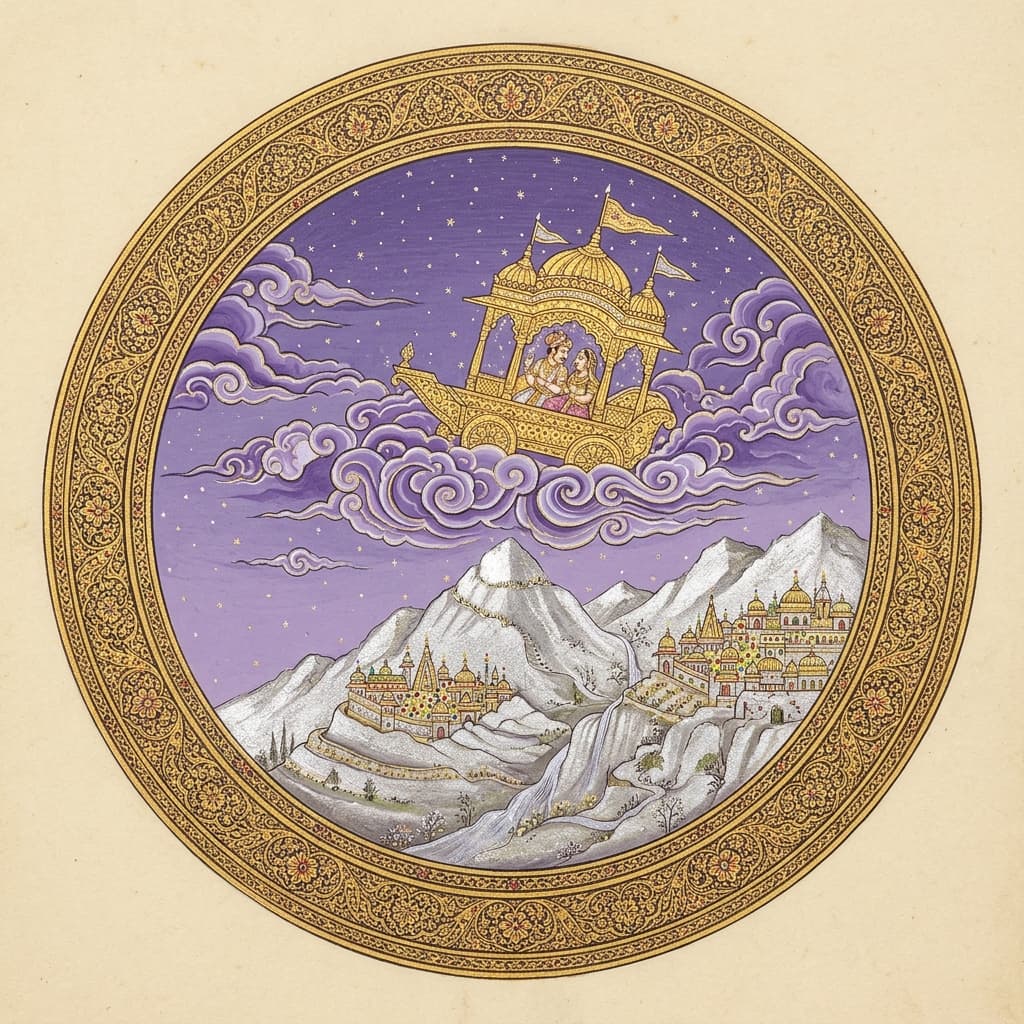
Nami and Vinami, kinsmen of Rishabhadeva, received the Vijayardha mountain and its vidyas (magical sciences) from Dharanendra. Their descendants are human beings who fly through the sky and command vidyas, ruling the northern and southern rows of cities. Ravana's and Sugriva's houses both grew out of this line.
- Seat
- Mount Vijayardha: Rathanupura and Alakavati
- Emblem
- Vidyas, the magical sciences
- Era
- From Rishabhadeva's time
Rakshasa Vamsha
राक्षस वंश
28 people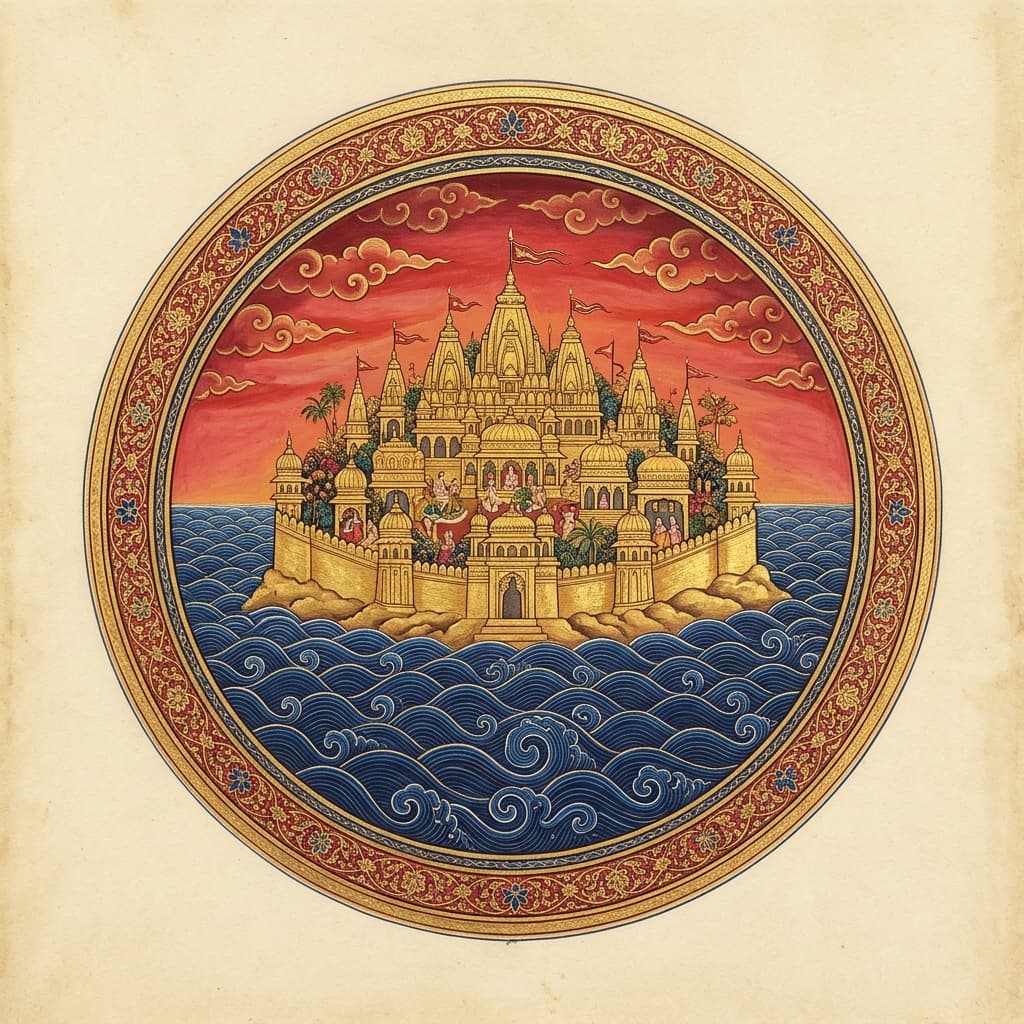
In Ajitanatha's time the Vidyadhara prince Meghavahana fled to the Samavasarana, and Bhima, lord of the Rakshasa gods, gave him Lanka, Patala Lanka and a divine necklace. The house took its name from a later king called Rakshasa. Its people are Vidyadharas, not demons; Ravana is the eighth Prati-narayana of this line.
- Seat
- Lanka
- Emblem
- Named after King Rakshasa
- Era
- From Ajitanatha's time
Vanara Vamsha
वानर वंश
26 people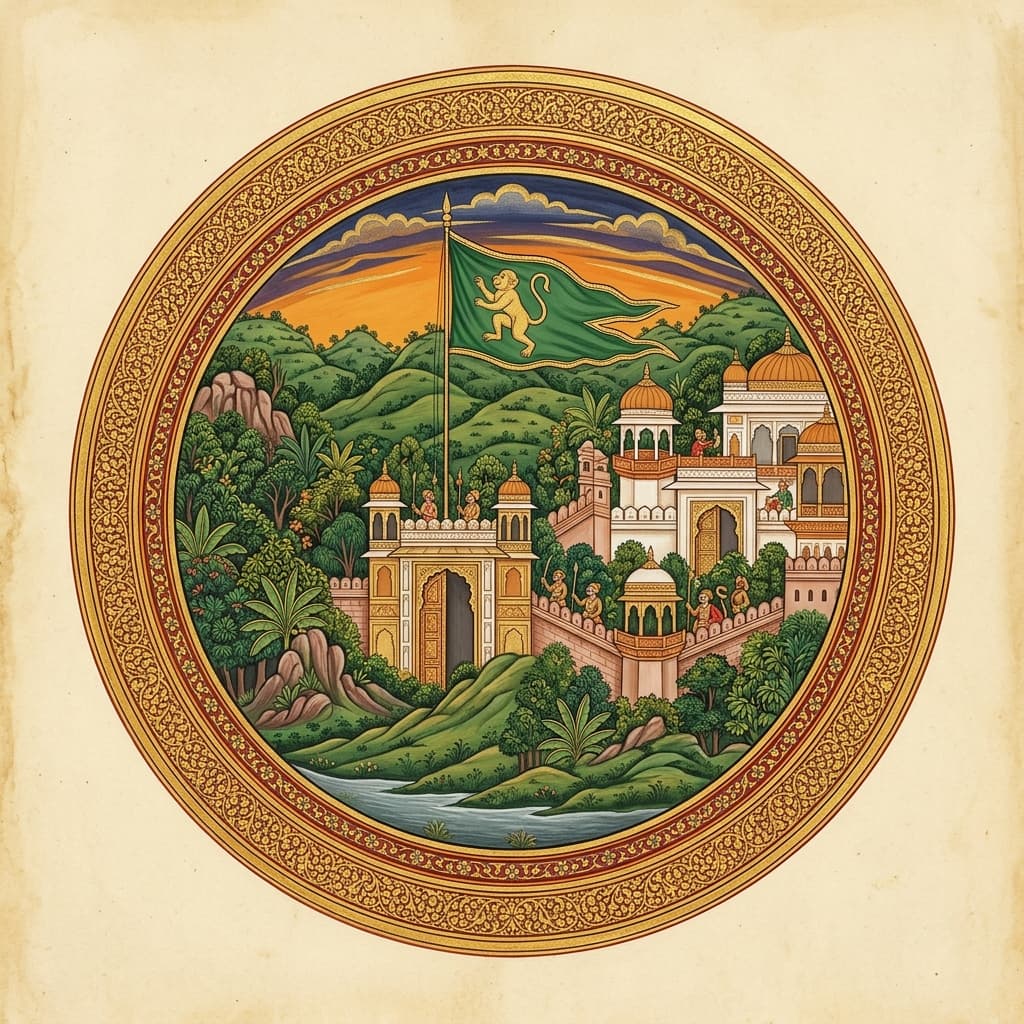
Shrikantha, a Vidyadhara prince of Meghapura, received the island of Vanaradvipa from his brother-in-law Kirtidhavala of Lanka and founded Kishkupura. King Amaraprabha later painted monkeys on his banners and crowns, and the house became known as the Vanaras. Bali, Sugriva, Nala, Nila and Angada are its heroes.
- Seat
- Kishkindhapura and Kishkupura
- Emblem
- The monkey on banner and crown
- Era
- From Shrikantha, after Kirtidhavala's time
Hari Vamsha
हरिवंश
17 people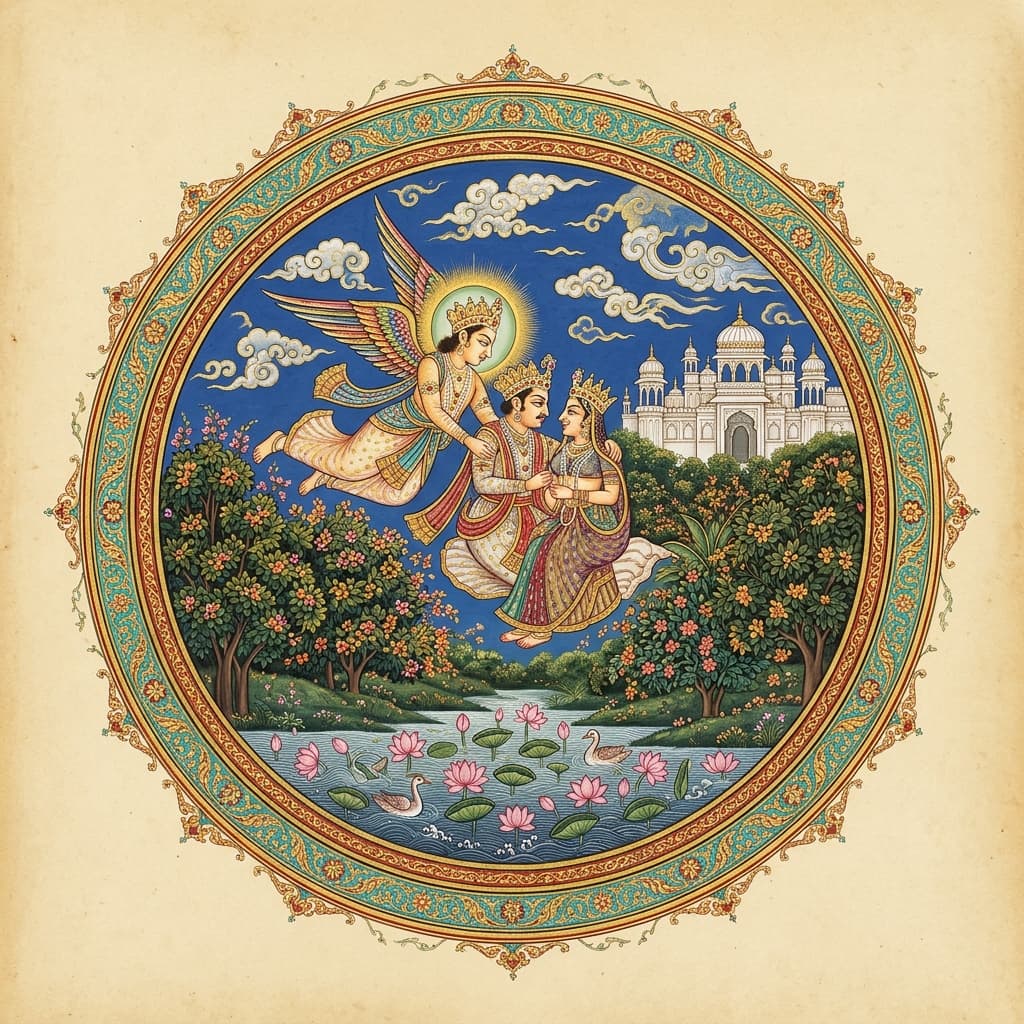
After Shitalanatha's time, King Sumukha of Kaushambi and Vanamala were reborn as a Vidyadhara couple and carried from Harikshetra by a god, so he became known as Hari. His line produced the twentieth Tirthankara Munisuvrata and, later, King Janaka of Mithila, father of Sita and Bhamandala.
- Seat
- Kushagranagara and Mithila
- Emblem
- Named after Hari
- Era
- From Shitalanatha's time
Allied Royal Houses
सम्बद्ध राजकुल
41 people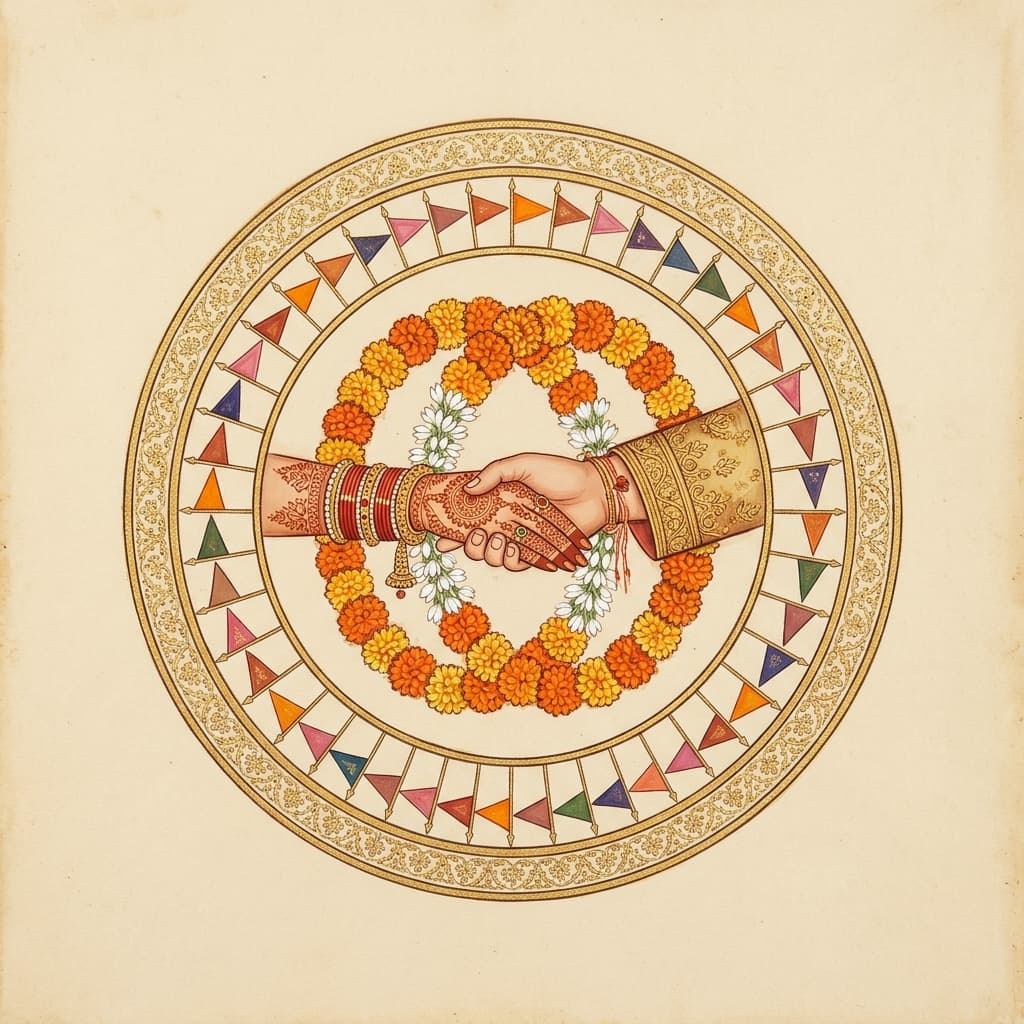
Kingdoms bound to the great lines by marriage and friendship: Kaikeyi's Kautukamangala, Kaushalya's Darbhasthala, Sumitra's Kamalasankula, Vanamala's Vijayapura, Kalyanamala's Nalakuvara, Vajrajangha's Pundarikapura and others.
- Seat
- Many cities
- Emblem
- Kinship by marriage
- Era
- Rama's generation
The story in twelve movements
From the first dynasties to Rama's liberation, the 123 parvas fall into twelve great movements. Each one is illustrated and retold with its turning points.
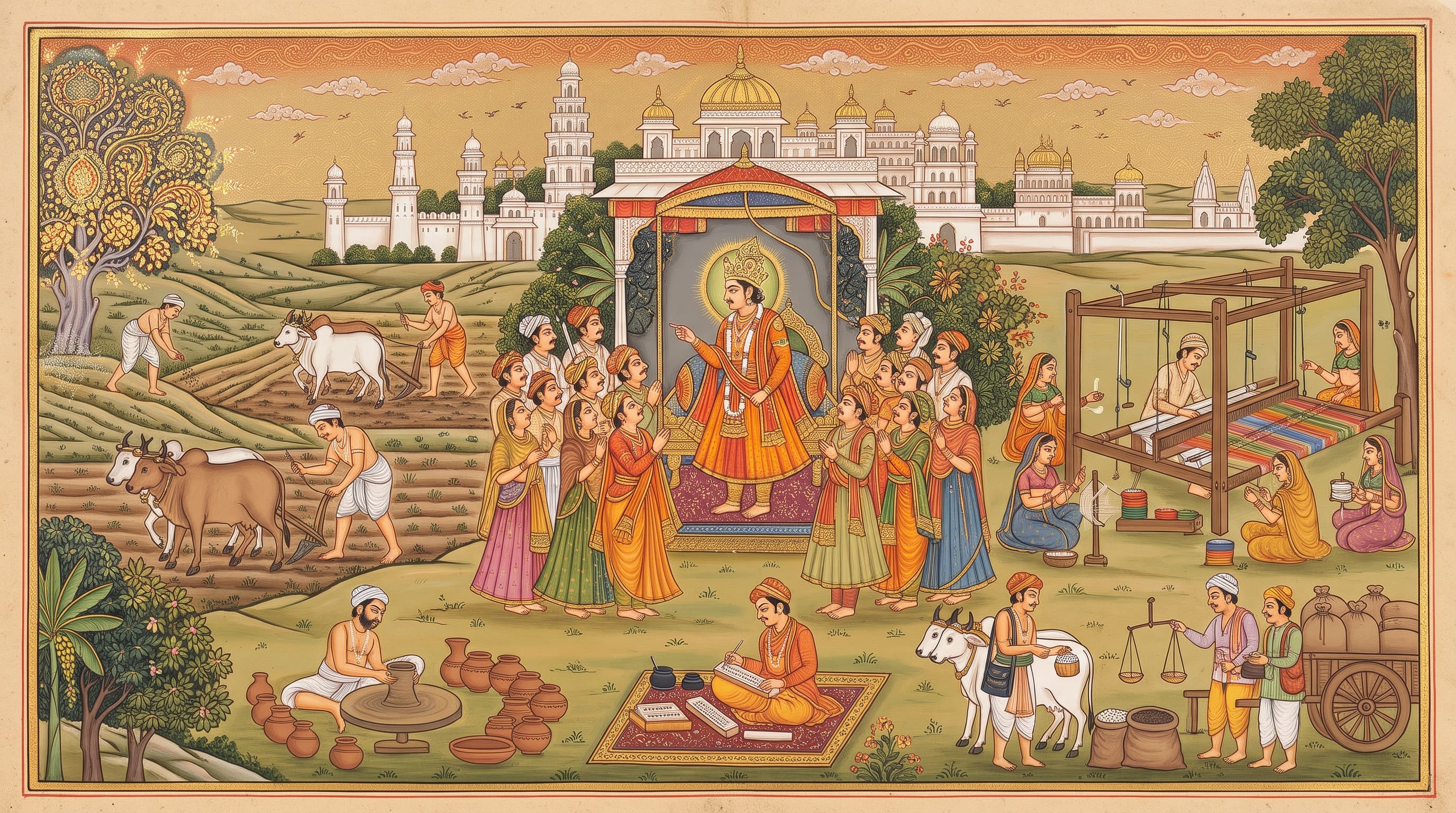
Arc 1 · Parvas 1 to 5
Origins: The World and Its Dynasties
King Shrenika asks Gautama Ganadhara to tell the true story of Rama. The answer begins with the shape of the universe, the patriarchs and Rishabhadeva, and the birth of the four great dynasties: Ikshvaku, Soma, Vidyadhara and Hari.
Arc 2 · Parvas 6 to 14
Rakshasas, Vanaras and the Rise of Ravana
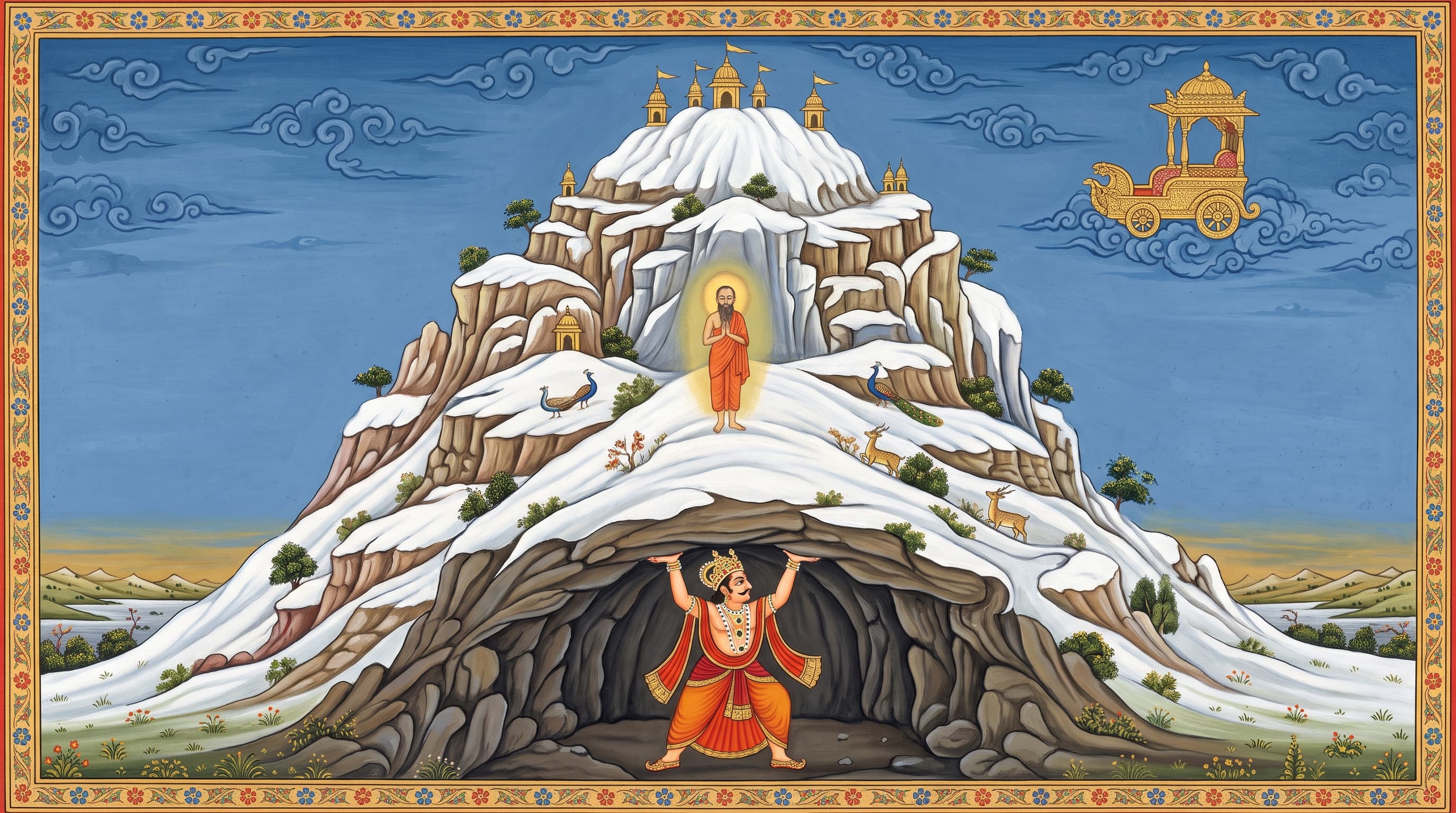
The Vidyadhara houses of Lanka and Kishkindha take shape, Ravana is born to Ratnashrava and Kekasi, masters a thousand vidyas and conquers the Vidyadhara world, while the sage Bali humbles him at Kailasa.
Arc 3 · Parvas 15 to 19
Anjana and the Birth of Hanuman
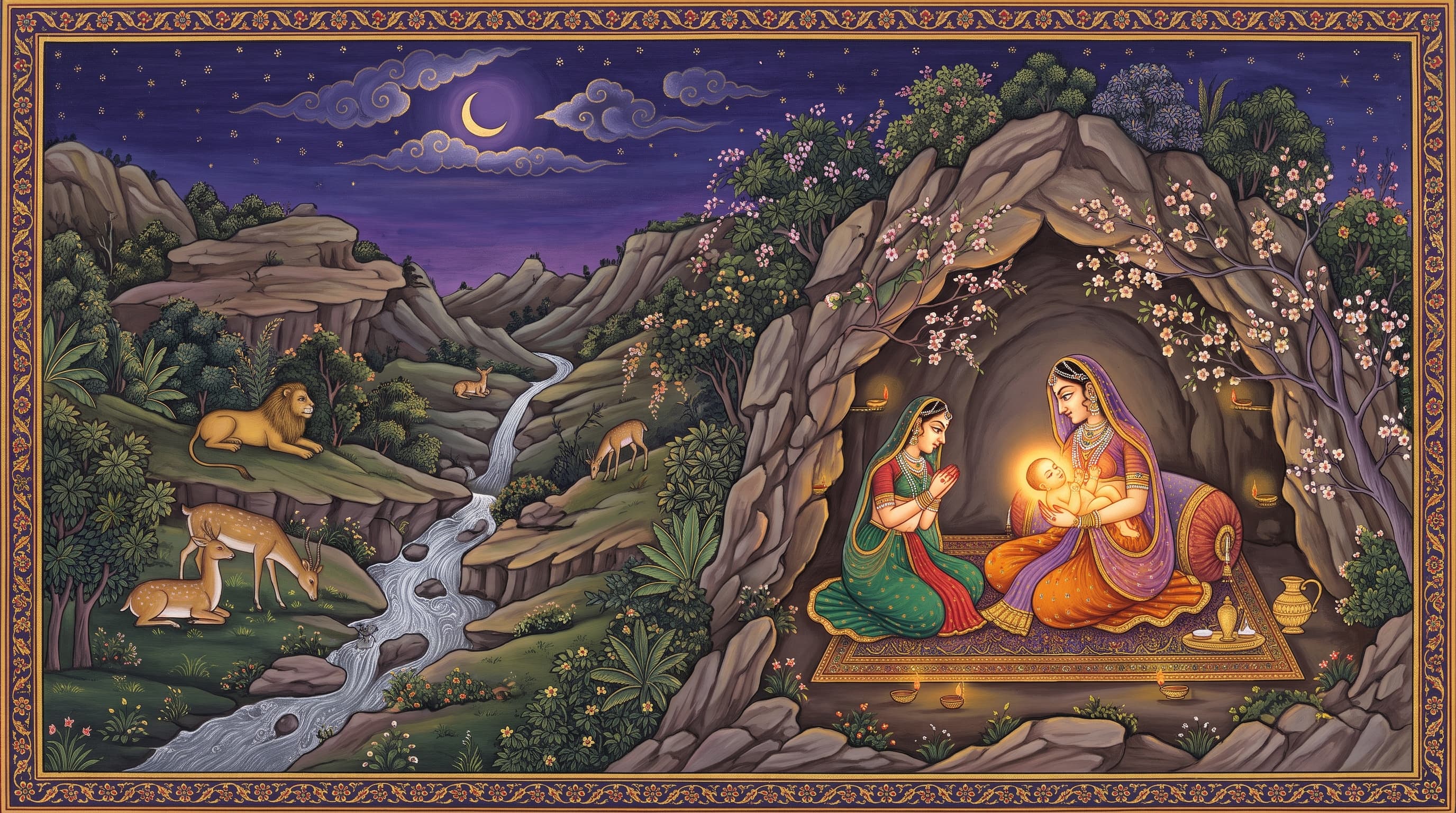
Princess Anjana is married to Pavananjaya and then neglected for twenty-two years. Cast out while pregnant, she gives birth in a mountain cave to Hanuman, who grows into a peerless warrior and a Kamadeva.
Arc 4 · Parvas 20 to 29
The House of Raghu: Births and Marriages
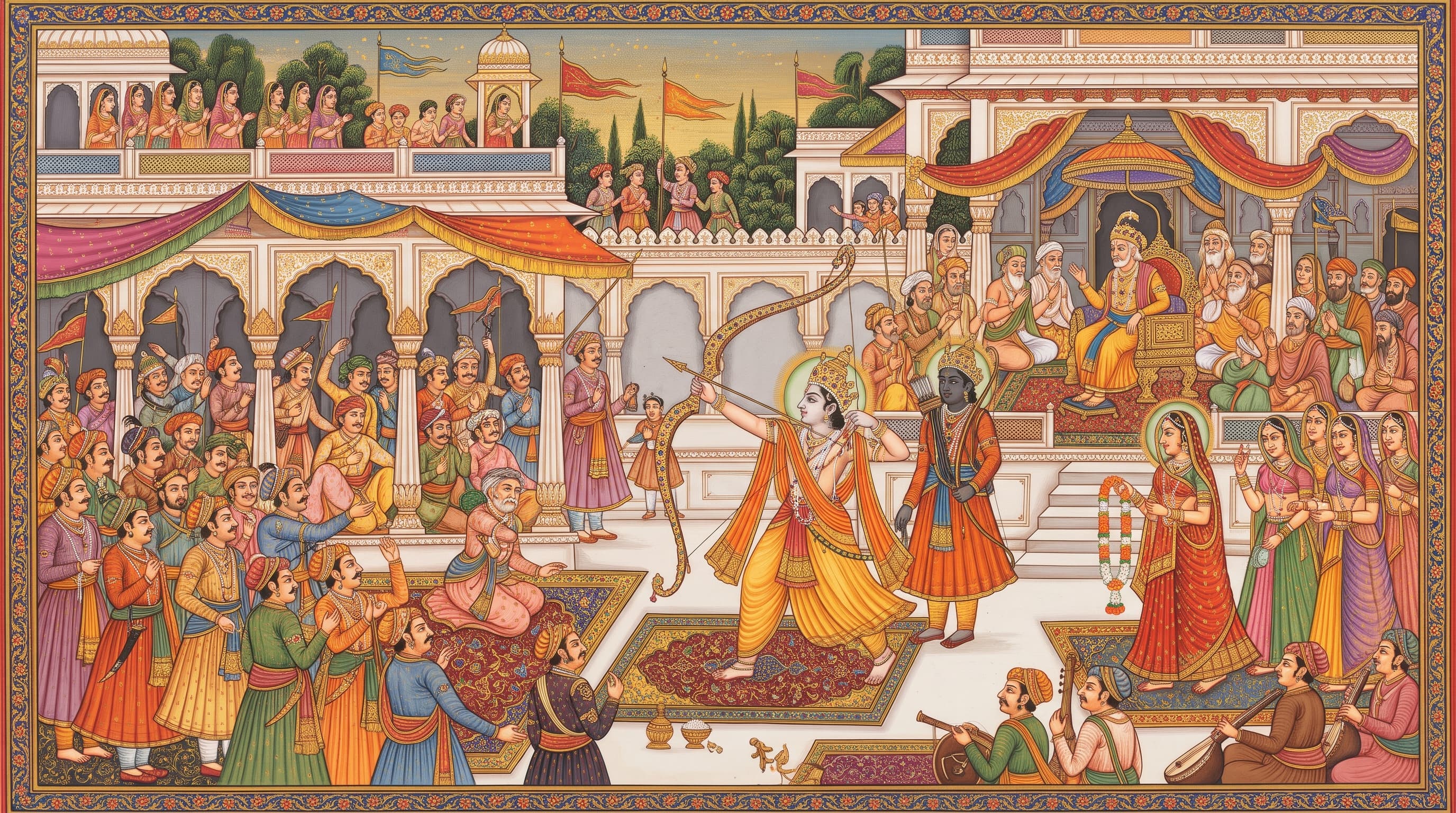
The sixty-three great beings are listed, the Ikshvaku line descends to Dasharatha, Kaikeyi wins her boon, and Rama, Lakshmana, Bharata and Shatrughna are born. In Mithila, Sita and her twin Bhamandala are born, and Rama wins Sita at her svayamvara.
Arc 5 · Parvas 30 to 43
Exile in the Forests
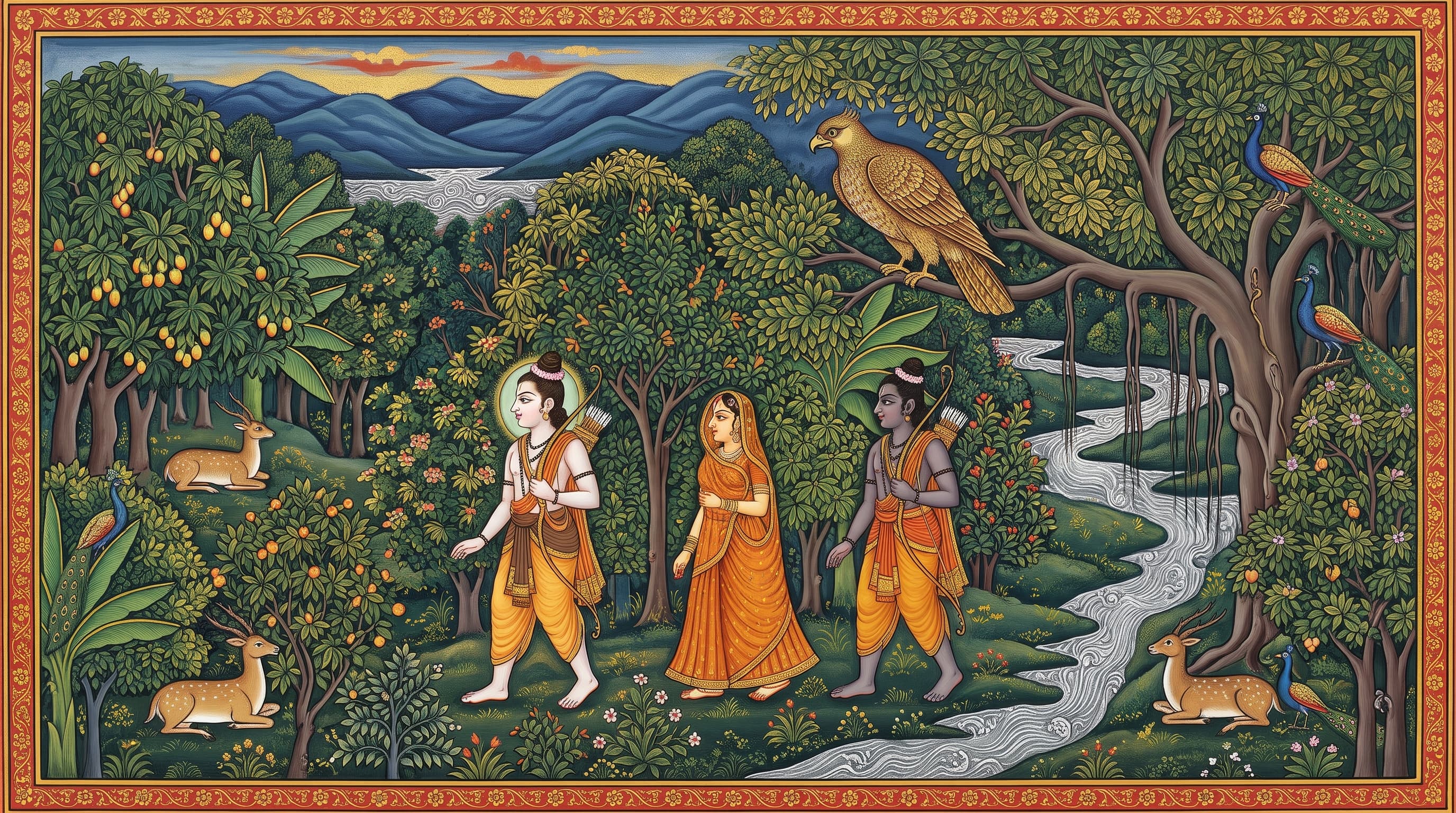
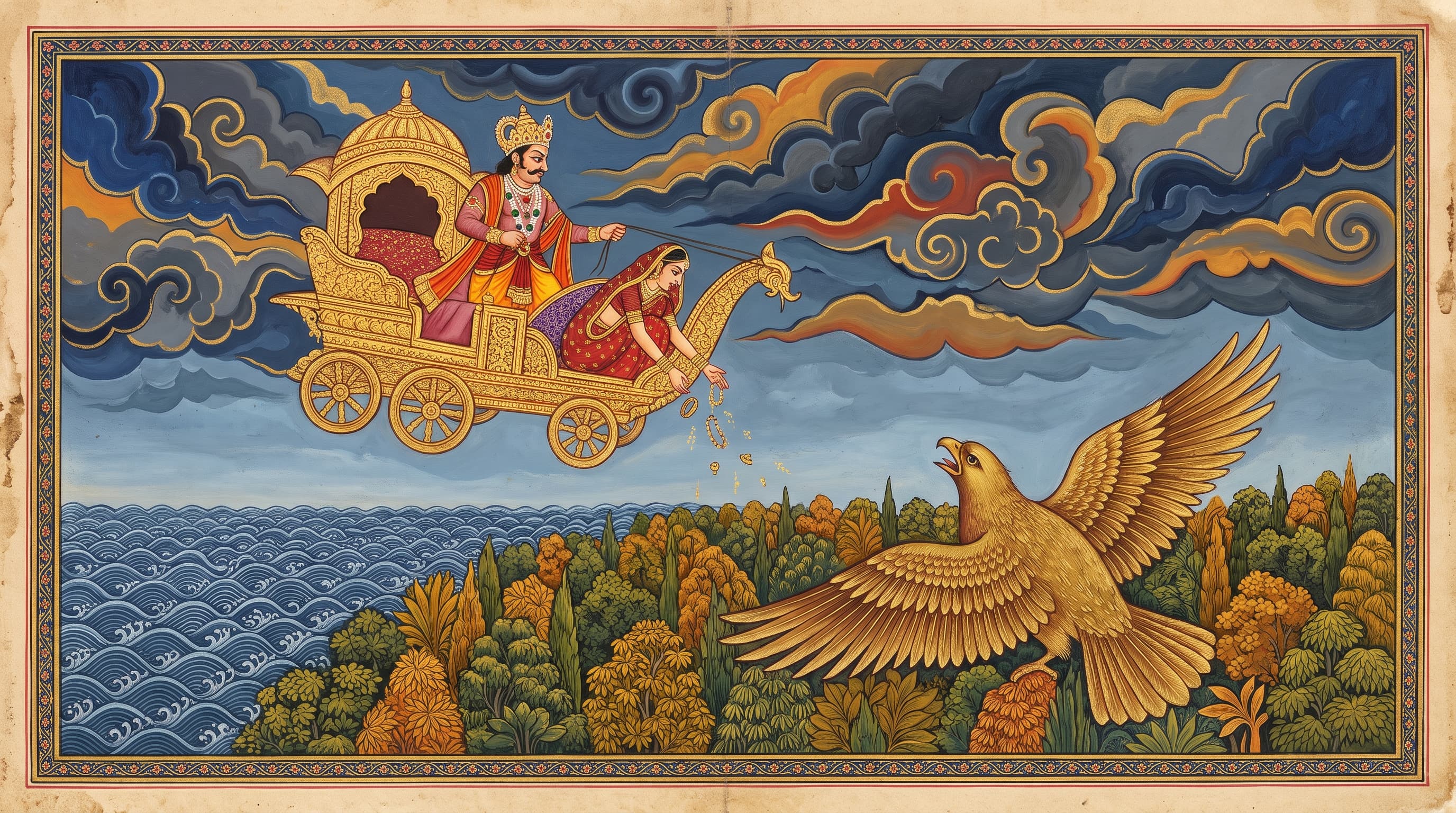
Dasharatha renounces the world, Bharata is crowned at Kaikeyi's request, and Rama, Sita and Lakshmana leave Ayodhya. On their journey they protect the faithful, win allies and brides for Lakshmana, meet the bird Jatayu and settle in the Dandaka forest.
Arc 6 · Parvas 44 to 53
Sita's Abduction and Hanuman's Mission
Ravana carries Sita away to Lanka. Rama allies with Sugriva after slaying the false Sugriva, Lakshmana lifts the Kotishila stone, and Hanuman crosses to Lanka, finds Sita and shakes the island.
Arc 7 · Parvas 54 to 76
The War of Lanka
Vibhishana joins Rama, the armies meet, Lakshmana falls to Ravana's Shakti and is revived by Vishalya, Ravana gains the Bahurupini vidya, and at last his own chakra passes into Lakshmana's hand and ends the war.
Arc 8 · Parvas 77 to 88
Victory and the Return to Ayodhya
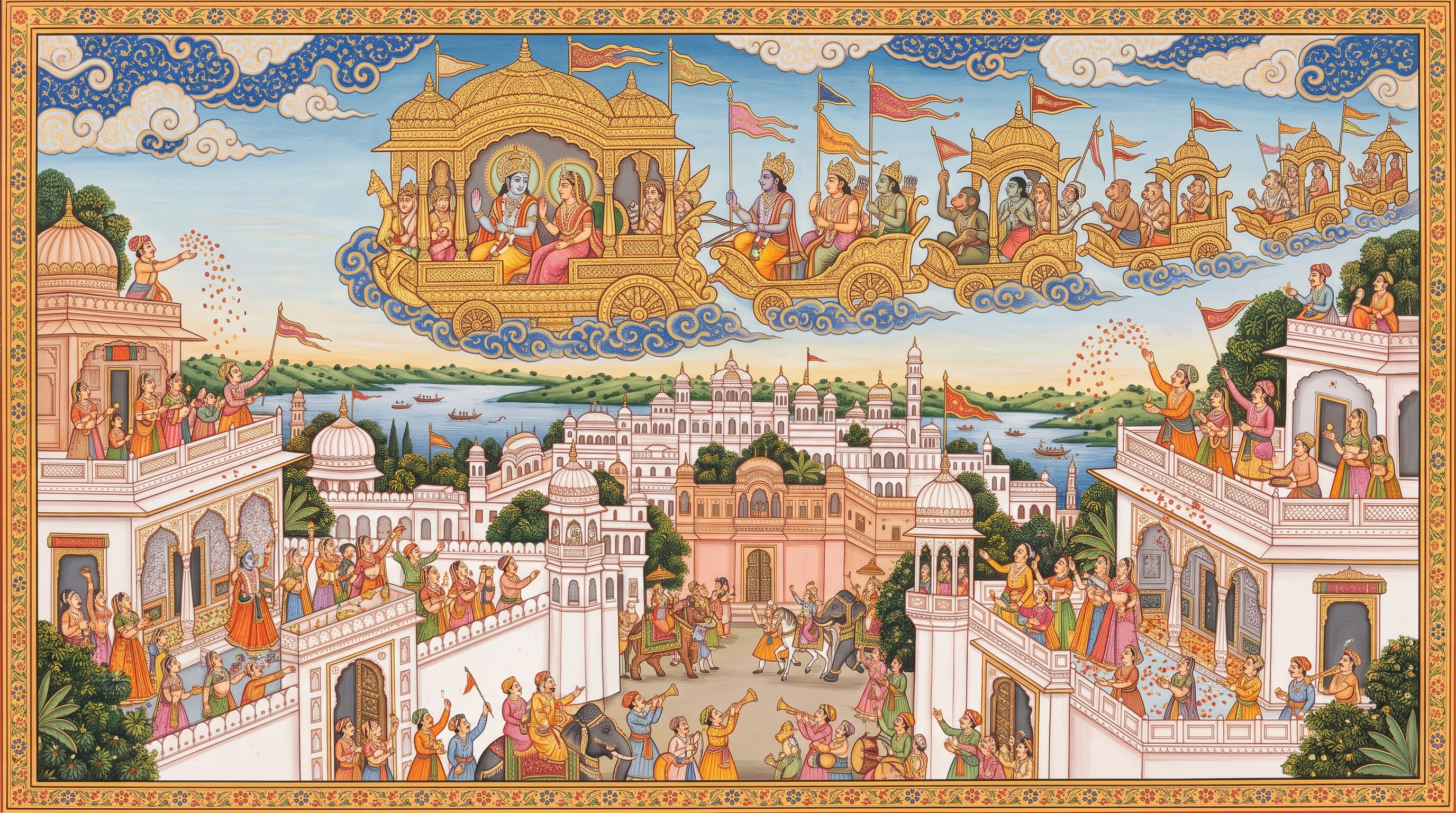
Ravana's family mourns and many take diksha, Rama and Sita are reunited, and the brothers return to Ayodhya in triumph. Bharata and Kaikeyi renounce the world, and Rama and Lakshmana are crowned.
Arc 9 · Parvas 89 to 99
The Reign, Mathura and Sita's Exile
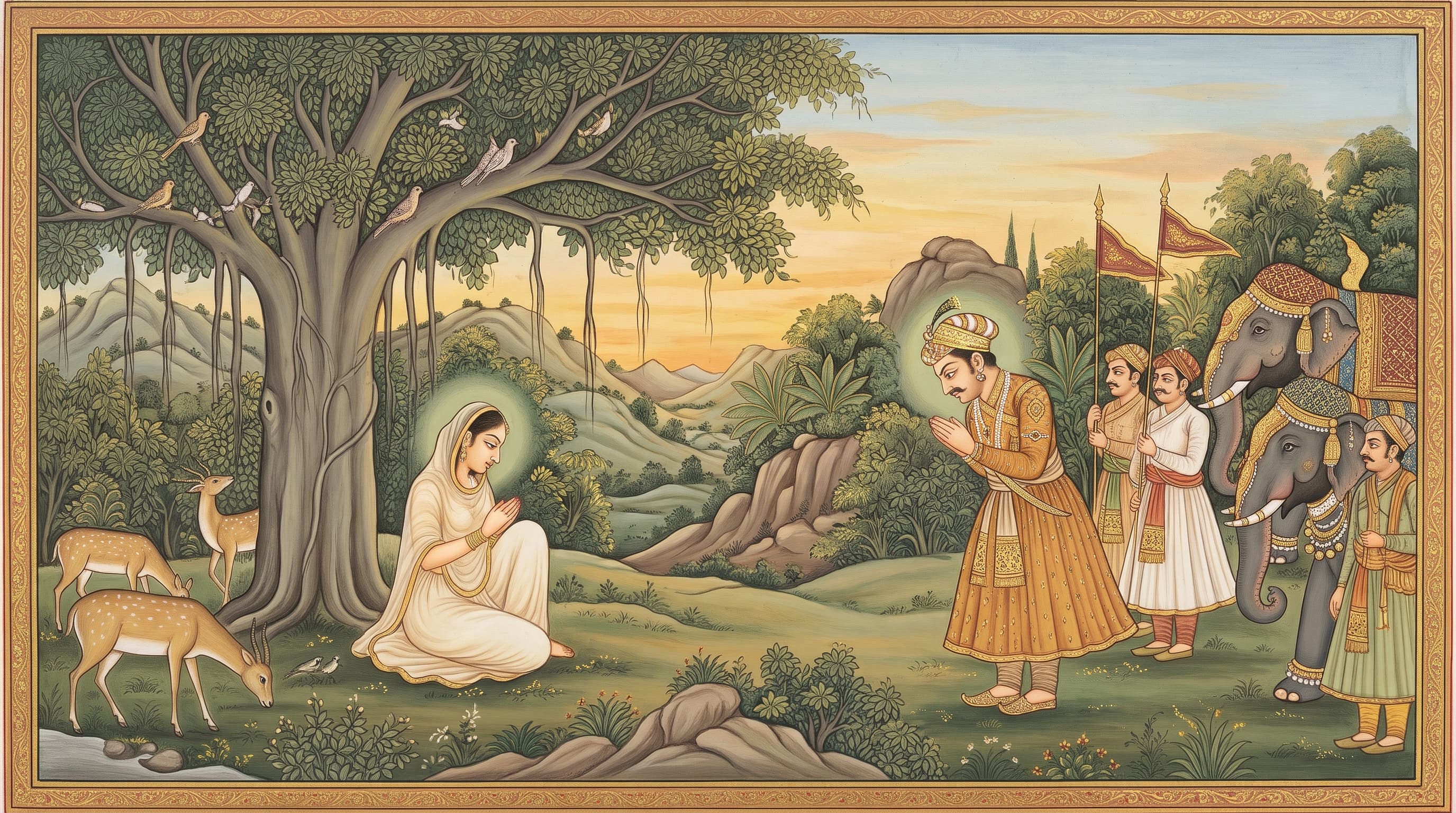
Shatrughna wins Mathura and the seven sages lift its calamity. Rama's court flourishes, but public slander about Sita leads Rama to send her into the forest, where King Vajrajangha takes her under his protection.
Arc 10 · Parvas 100 to 108
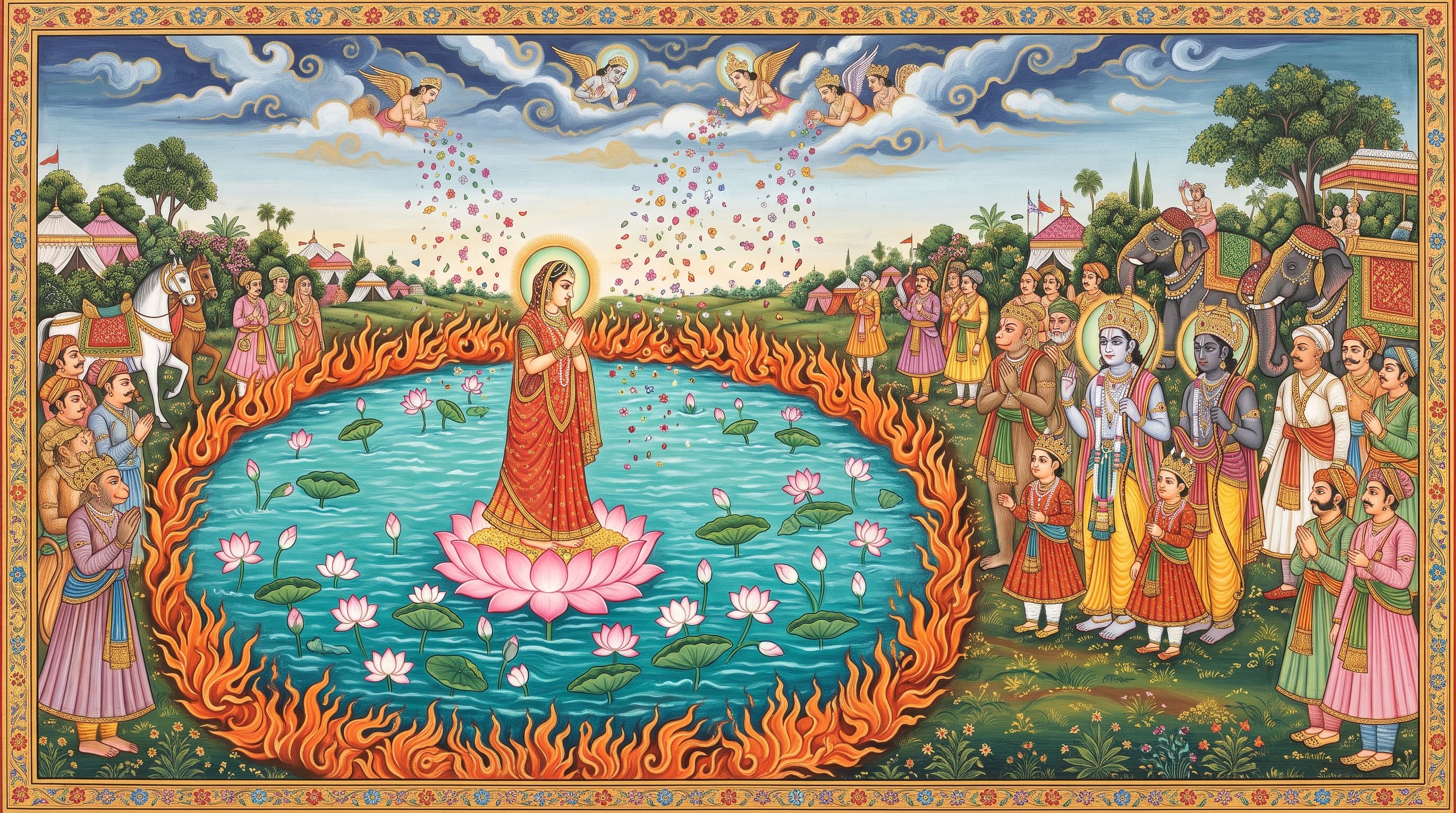
Lavana, Ankusha and the Ordeal of Fire
Sita's twin sons grow into conquerors and face their own father and uncle in battle before they are recognised. Sita walks into fire, which turns into a lotus lake by the power of her virtue, and the past lives of all are revealed.
Arc 11 · Parvas 109 to 118
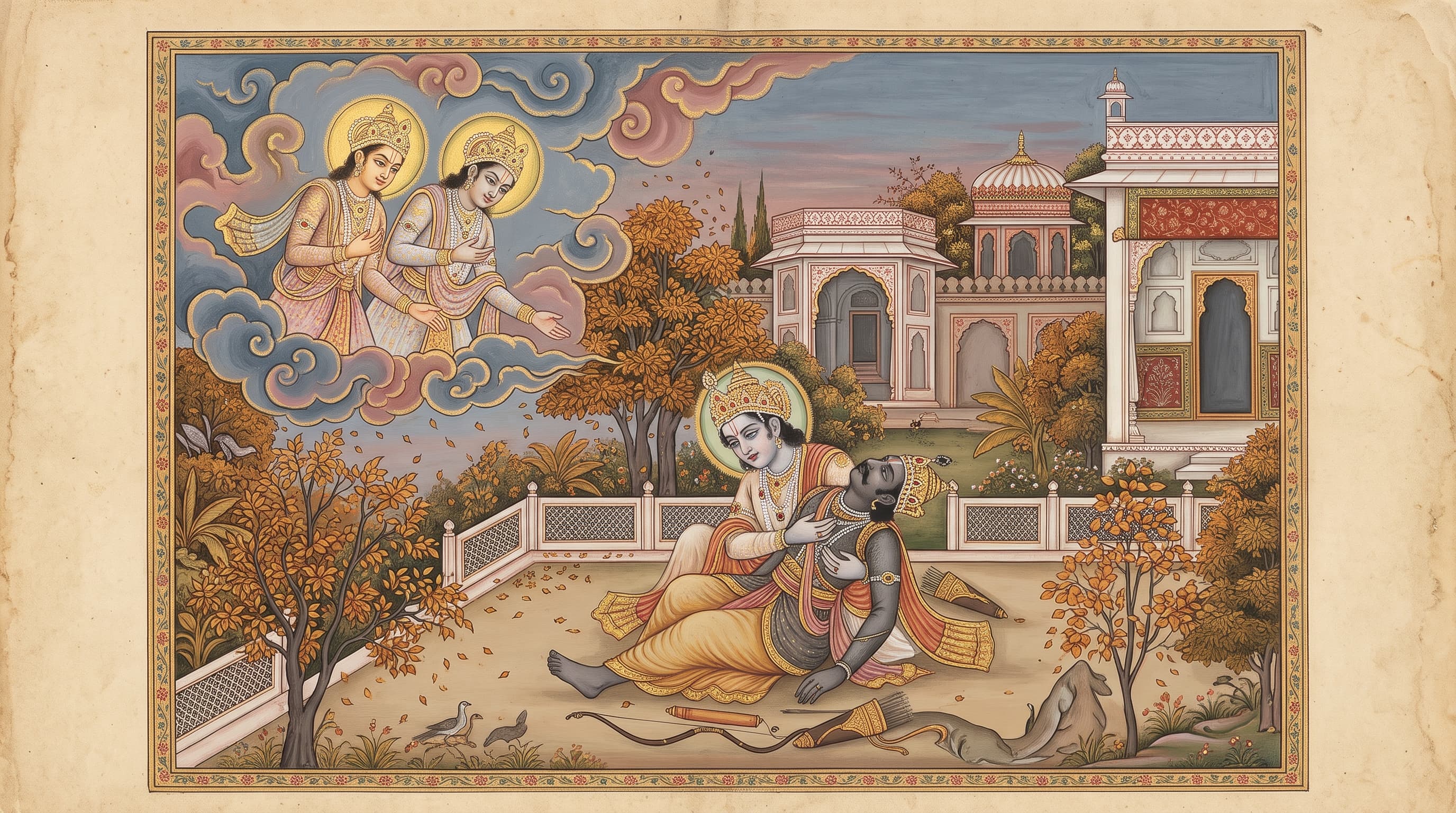
The Great Renunciations
Sita becomes an aryika and rises to heaven, Lakshmana's sons and Hanuman renounce the world, and when two gods test the brothers' love, Lakshmana dies of grief. Rama wanders with his brother's body until the gods awaken him.
Arc 12 · Parvas 119 to 123
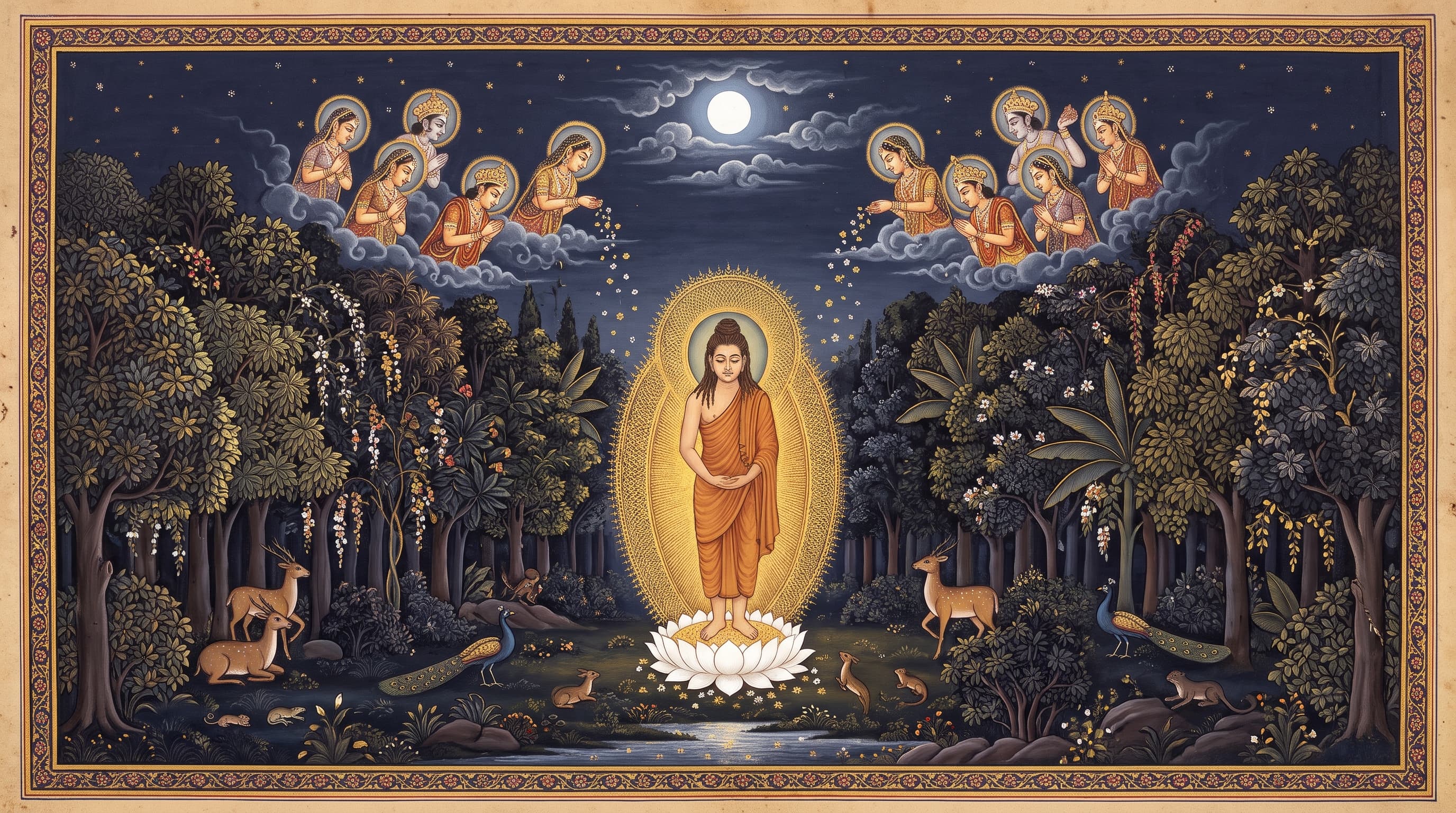
Rama's Liberation
Rama takes diksha from the sage Suvrata, keeps fierce austerities, withstands the trial sent by Sita's soul from heaven, attains Kevala Jnana and finally moksha, while Sita's soul travels to hell to awaken Lakshmana and Ravana.
Every parva, point by point
Read all 123 parvas the way the text tells them: who did what, where, with which vow, vidya or weapon, and what became of them. Each chapter page has a summary, a detailed list of events, the people involved and the places.
1,181Key moments
Browse all 123 chapters- 7Parva 7The Birth of Ravana and His Mastery of the VidyasRavana is born to Ratnashrava and Kekasi and, unshaken by a Yaksha's terrors, masters thousands of vidyas in the Bhima forest.
- 17Parva 17Anjana's Pregnancy Revealed and Her Banishment by Her Mother-in-LawCast out by her mother-in-law and father, Anjana bears Hanuman in a forest cave and is rescued by her uncle Pratisurya.
- 28Parva 28Sita's Svayamvara and Her Marriage to RamaAt the svayamvara Rama strings the god-guarded bow Vajravarta and wins Sita, Lakshmana strings Sagaravarta, and Bharata marries Kanaka's daughter Lokasundari.
- 44Parva 44Ravana Abducts Sita, and Rama LamentsLuring Rama away with a false lion-roar while Lakshmana fights Kharadushana, Ravana abducts Sita and strikes down Jatayu, and Rama searches in despair.
- 53Parva 53Hanuman Meets Sita in Lanka and Lays the City WasteHanuman gives Rama's ring to Sita, persuades her to eat, receives her crest-jewel, then breaks Ravana's chains and wrecks Lanka.
- 75Parva 75Ravana Hurls the Chakra at Lakshmana, and It Circles Him and Comes to His HandRavana hurls his chakra-ratna at Lakshmana, but it circles him three times and rests in his hand, revealing him as the Narayana.
About the text
The Padma Purana, also called the Padmacharita, was composed in Sanskrit by the Digambara monk Acharya Ravishena in the seventh century. In 123 parvas it tells the life of Padma, the name by which the Jain tradition knows Rama, as the answer Gautama Ganadhara gave to King Shrenika in the assembly of Mahavira.
In the eighteenth century Pandit Daulatram Kasliwal rendered it into Dhundhari, the old Hindi of the Jaipur region, and that vachanika is still read aloud in Jain temples. The summaries on this site follow the 2009 Hindi edition from Paras Prakashan, Delhi, rendered from the Dhundhari by Aryika Dakshmati Mataji.